Elopement and wandering risk in memory care: how facilities keep residents safe
By Rod Burnett · Updated 2026-07-09
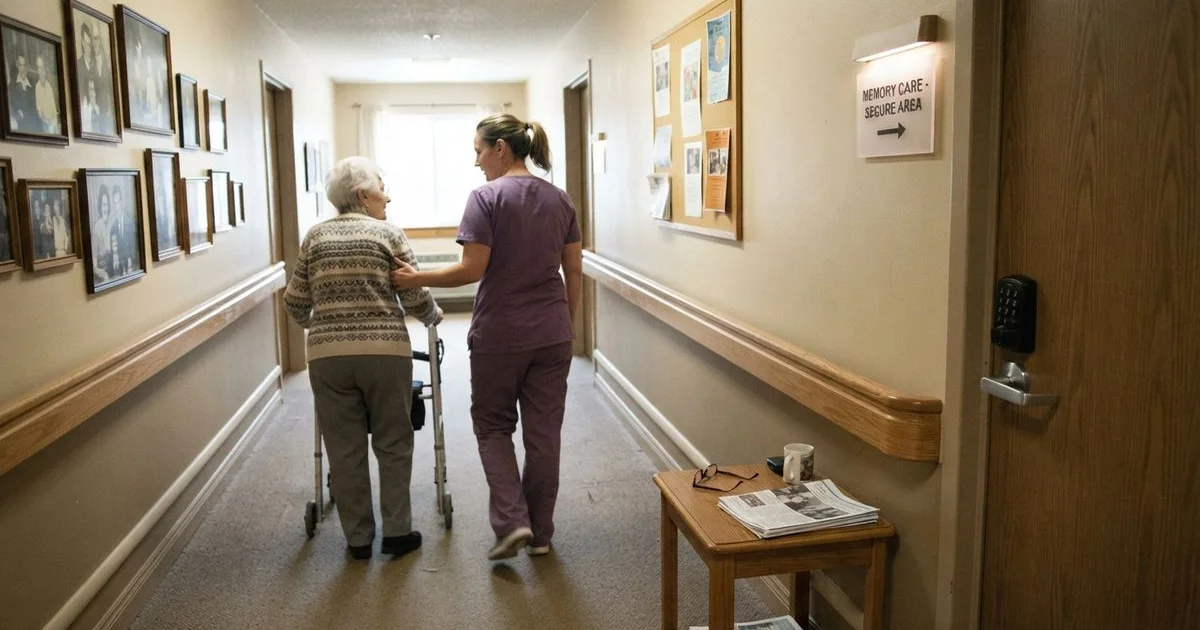
Wandering is one of the most common and most frightening behaviors tied to dementia, and it’s the single biggest reason families choose a secured memory care unit over standard assisted living. This is general safety information, not medical advice; a physician or care team can speak to a specific resident’s risk level.
Why wandering happens
Wandering rarely looks random to the person experiencing it. A resident might be trying to get to a job they retired from decades ago, looking for a spouse who has passed away, or simply following an old routine like walking to a bus stop. Confusion about time and place, combined with a real physical urge to move, is often behind it. Recognizing this helps families understand that wandering isn’t defiance or carelessness. It’s a symptom that calls for a physical and staffing response, beyond a verbal reminder alone.
Risk tends to rise with certain patterns: a history of wandering at home, restlessness in the late afternoon or evening (sometimes called sundowning), and earlier stages of dementia where a resident is still physically capable but cognitively unable to judge danger. A resident who is mobile and disoriented is the highest-risk combination a facility has to plan around.
The safeguards worth checking for
Most licensed memory care units in North Carolina use a layered approach rather than relying on one single measure.
- Secured perimeters. Exit doors use keypad codes, delayed-egress alarms, or badge access that residents can’t operate, while staff and visitors can.
- Door and motion alarms. Alarms alert staff the moment someone approaches or opens an exterior door, giving them time to intervene before a resident actually leaves the building.
- Wander management systems. Some facilities use wearable sensors that trigger an alert if a resident crosses a defined boundary, adding a second layer beyond the door alarm itself.
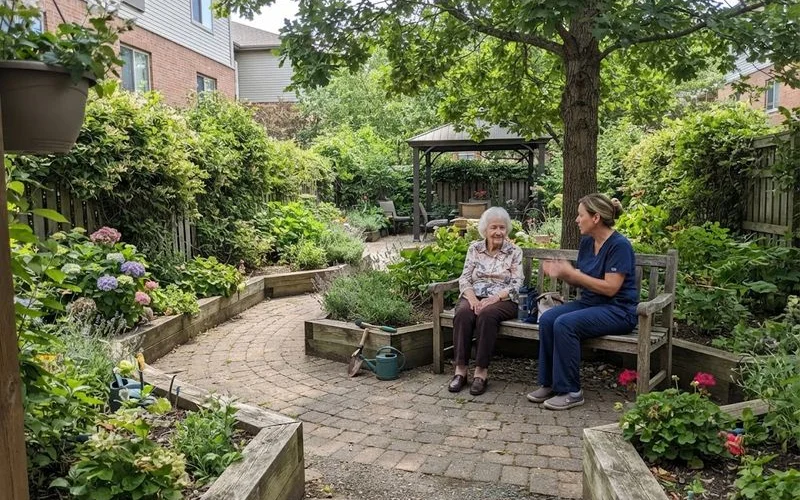
- Enclosed outdoor space. A secured courtyard or garden lets residents go outside safely without staff having to physically escort every trip.
- Staff training and ratios. Staff trained to recognize early wandering behavior, like pacing near exits or repeatedly asking to go home, can redirect a resident before it becomes an incident. Ask how many direct care staff are on shift during evening hours specifically, since that’s when wandering risk often peaks.
- A written elopement protocol. Every licensed facility should have a specific plan for what happens if a resident is found missing: who is notified, how quickly law enforcement is contacted, and how the search is coordinated.
Questions worth asking on a tour
| Question | What the answer tells you |
|---|---|
| How are exits secured? | Whether the unit relies on locks alone or has layered alerts |
| Do you use a wander management system? | Whether individual residents get an extra layer of tracking |
| What’s your evening staffing ratio? | Whether coverage matches peak wandering hours |
| Has an elopement happened here before, and what changed? | How the facility actually responds to a real incident, beyond what its policy says on paper |
| Is the outdoor space secured? | Whether residents can go outside without a 1:1 escort every time |
A facility that answers these questions specifically, with real numbers and real examples, tends to be one that takes the issue seriously day to day, not just in a policy binder.
What this means for choosing a facility
If a loved one has a documented history of wandering, a standard assisted living unit likely isn’t set up to manage that risk safely, even with attentive staff. Our memory care facilities in Charlotte hub is a starting point for finding communities that specialize in this level of security. During a tour, watch the exits yourself rather than only listening to the answer: notice whether doors are propped open, whether alarms are audible, and whether the layout would let someone slip out during a shift change or a busy meal service.
It’s also worth asking how the facility balances security with quality of life. The goal of a secured unit isn’t restriction for its own sake, it’s freedom to move safely. A well-run memory care community lets residents walk, garden, and sit outside without staff hovering over every step, because the environment itself is doing part of the work.
If you’re just starting this process, our guide on moving a parent with dementia into memory care walks through what the transition itself looks like.
For a full picture of how we score and verify facilities on this list, see our scoring methodology. You can also browse the full directory from our home page if memory care ends up being one option among several you’re comparing.
FAQ
- What does elopement mean in memory care?
- Elopement is when a resident with dementia or cognitive impairment leaves a facility unsupervised and unnoticed, often because confusion or a fixed idea, like wanting to go home or pick up a child, sends them looking for an exit.
- Why do people with dementia wander in the first place?
- Wandering is usually purposeful to the person doing it, even if it looks aimless. Common triggers include disorientation, boredom, searching for something familiar, or acting on an old routine like going to work.
- What should I ask a facility about elopement prevention on a tour?
- Ask how exits are secured, whether they use door alarms or a wander management system, how staff are trained to recognize wandering behavior, and what their written protocol is if a resident goes missing.
- Is a secured memory care unit the same as being locked in?
- No. A secured unit controls exit points to prevent unsafe departures, but residents still move freely within the unit and its outdoor spaces. The security is about the perimeter, not the person's daily movement inside it.
Related on this site
- Browse memory care providers
- Moving a parent with dementia into memory care: what to expect
- Memory care costs: why it runs higher and what you're paying for
- Fall risk and fall prevention: what to look for in an assisted living facility
- Medication management in assisted living: questions to ask before you choose
- All guides →