Resident rights in North Carolina assisted living facilities
By Rod Burnett · Updated 2026-07-25

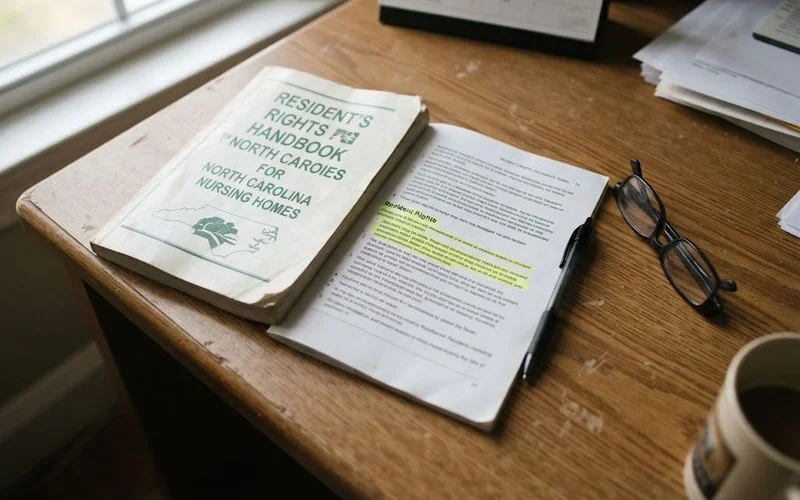
Every resident of a licensed North Carolina assisted living facility retains specific legal rights, regardless of their level of care need or cognitive status. Knowing what these rights actually cover helps families recognize both good and concerning practices at a facility. This is general information, not legal advice; for a specific rights dispute, consult an elder law attorney or the state ombudsman program.
The core categories of resident rights
North Carolina resident rights protections generally cover the following areas:
- Dignity and respect. The right to be treated with courtesy and respect, free from abuse, neglect, or exploitation.
- Privacy. Privacy in personal care, medical information, financial affairs, and communication, including private phone calls and unopened mail.
- Autonomy in care decisions. The right to participate in decisions about one’s own care and, generally, to refuse specific treatments or services, within the bounds of safety and capacity.
- Property and finances. The right to manage personal finances, unless a legal guardian or power of attorney has been established, and protection from financial exploitation by staff or the facility.
- Grievances. The right to voice complaints without fear of retaliation, and to have those complaints addressed through a formal process.
- Notice before discharge or transfer. The right to advance written notice and a documented reason before being discharged or transferred to another facility, except in genuine emergencies.
- Visitation. The right to receive visitors, within reasonable facility policies, including family, friends, and legal or medical representatives.
What a negotiated risk agreement is for
Sometimes a resident wants to make a choice that carries some risk, like declining a recommended level of supervision or continuing an activity a facility considers unsafe. North Carolina facilities can use a negotiated risk agreement in these situations: a written document that lets a resident accept a specific, informed risk while remaining in the community, rather than being pushed toward discharge or forced compliance. This tool exists precisely to balance safety with a resident’s right to self-determination, and it should be a genuine, informed conversation, not a form pushed through without explanation.
Recognizing when rights may be at risk
| Warning sign | What it may indicate |
|---|---|
| Staff opening or reading a resident’s mail | Privacy right violation |
| Sudden discharge with no written notice or explanation | Improper discharge procedure |
| A resident discouraged from voicing complaints | Grievance right not being honored |
| Restricted or monitored visits without a documented safety reason | Visitation right concern |
| Unexplained changes to a resident’s financial accounts | Possible financial exploitation |
None of these alone proves a violation occurred, but a pattern, or a facility’s defensive reaction to being asked about it directly, is worth taking seriously.
Where to go for help
The NC Long-Term Care Ombudsman program exists specifically to advocate for residents of licensed care facilities, investigate complaints, and help resolve disputes between residents, families, and facilities. This is often a faster and more resident-focused first step than a formal legal complaint. For licensing violations specifically, the NC Division of Health Service Regulation accepts and investigates complaints. For a legal dispute involving a contract, discharge, or a rights violation that isn’t resolved through these channels, an elder law attorney can advise on formal next steps.
Why this matters when choosing a facility
Understanding resident rights isn’t just useful if something goes wrong, it’s also a useful lens for evaluating a facility during a tour. Ask how the facility handles grievances, how residents are involved in their own care planning, and how visitation works in practice. A facility that answers these questions openly and specifically tends to be one that takes resident rights seriously as a matter of daily practice, not just a poster on the wall.
Our Charlotte assisted living directory lists facilities across the metro area, and our methodology explains how we score and verify them.
FAQ
- Do assisted living residents have the right to refuse specific care or treatment?
- Generally, yes. Residents retain the right to make decisions about their own care, including refusing specific treatments, as long as they have the capacity to do so, though this may involve a negotiated risk agreement documenting the decision.
- Can a facility discharge or evict a resident without notice?
- No. Licensed facilities are required to follow specific notice and documentation procedures before discharging or transferring a resident, and residents have the right to understand and, in many cases, appeal that decision.
- Do residents have a right to privacy?
- Yes, including privacy in personal, medical, and financial affairs, and the right to private communication such as unopened mail and private phone calls.
- What should I do if I believe a facility is violating a resident's rights?
- Complaints can be filed with the NC Division of Health Service Regulation, and the state's Long-Term Care Ombudsman program specifically advocates for residents and investigates rights-related concerns.