Touring an assisted living facility: what to check and what to ask
By Rod Burnett · Updated 2026-07-20
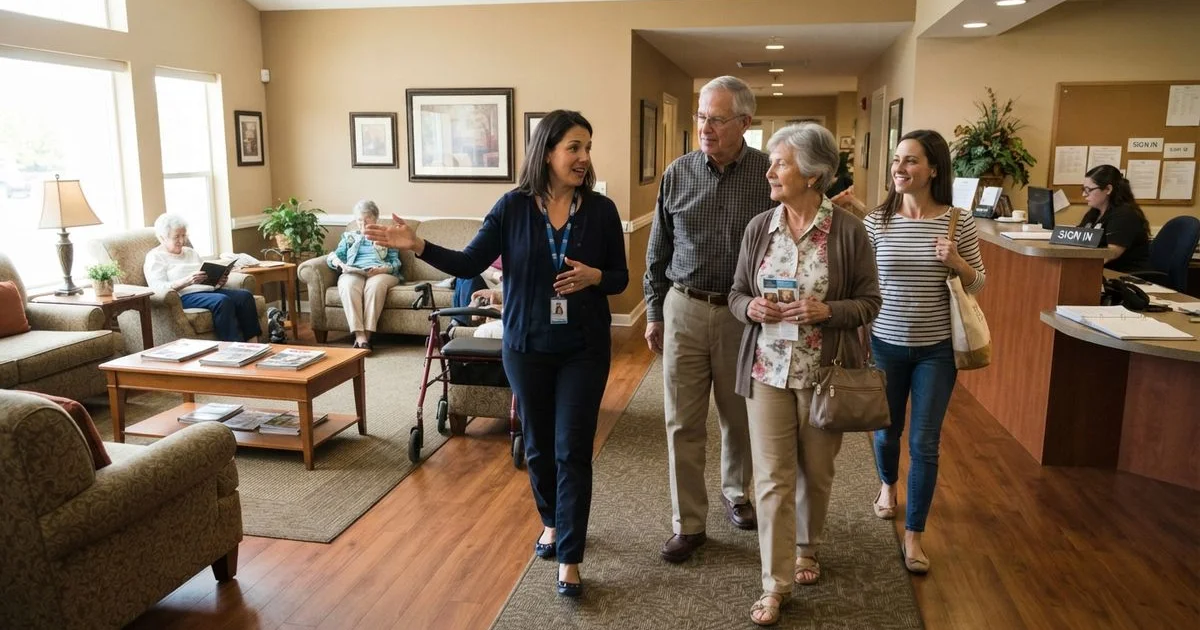
A facility tour is where marketing materials meet reality, and the difference between a good tour and a great one usually comes down to what you actively look for on your own, rather than what staff choose to point out. Here’s a practical way to structure the visit.
Before you go
Call ahead to confirm the visit and ask if you can also see a resident room that’s currently unoccupied, not just a model unit. Model rooms are often staged to look better than the average unit, so seeing an actual available room, if one exists, gives a more honest picture.
What to observe as you walk through
- Smell and cleanliness. A facility that smells strongly of cleaning products or, worse, odor, is worth noting. A well-run community usually smells neutral, not covered up.
- Staff interactions. Watch how staff talk to residents in the hallway, beyond how they talk to you. Warm, patient, unhurried interactions are a good sign; rushed or curt exchanges are a red flag.
- Resident engagement. Are residents in common areas actually participating in something, or is everyone parked in front of a television? Engagement level says a lot about how the activities program runs day to day, past what a printed calendar shows.
- Physical upkeep. Check for handrails, good lighting, clear walkways, and general maintenance. Small deferred repairs can be a sign of bigger budget or staffing issues.
- Outdoor space. If there’s a courtyard or garden, is it actually accessible and used, or more of a decorative feature?
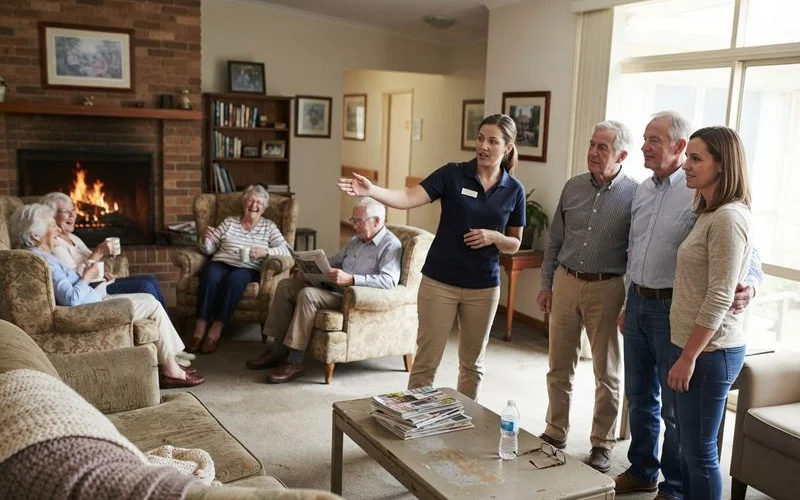
Questions to ask staff directly
| Question | What to listen for |
|---|---|
| What’s your staff-to-resident ratio, and does it change at night? | Specific numbers, not a vague “we’re well-staffed” |
| How do you handle a resident’s care needs changing over time? | A clear reassessment process, not an improvised answer |
| What’s your staff turnover like? | Long-tenured staff generally signal a healthier work environment |
| Can I see a sample activities calendar? | Whether the program is varied and genuinely resident-driven |
| How is medication management handled? | A specific, structured process rather than a general reassurance |
| What happens in a medical emergency? | A concrete protocol, including how quickly families are notified |
Try to attend a mealtime
If your schedule allows, arrange to be there during a meal. This single visit reveals more than almost any other part of a tour: whether staff are attentive and unhurried, whether residents seem to enjoy the food and each other’s company, and whether the dining room feels social or purely functional. It’s also a natural moment to strike up a brief conversation with a resident or two, if they seem open to it, since their honest impression is worth more than any brochure.
After the tour
Compare notes across facilities while details are still fresh, ideally the same day. A simple table works well for this:
| Facility | Cleanliness/smell | Staff warmth | Activity engagement | Cost | Follow-up questions |
|---|---|---|---|---|---|
| A | |||||
| B | |||||
| C |
A second visit, unannounced if the facility allows it, is worth the extra time before making a final decision. It’s one of the clearest ways to see whether the first tour reflected the community’s normal day-to-day, or a version specifically prepared for a prospective family.
Getting started
Our assisted living facilities in Charlotte hub lists options across the area to help you build a shortlist before scheduling tours. For a look at how we evaluate and rank the facilities in this directory, see our methodology, and browse the full site from our home page.
FAQ
- Should I schedule a tour in advance or drop in unannounced?
- Both, if possible. A scheduled tour gets you a proper walkthrough and time with staff, while an unannounced second visit, especially at mealtime, shows you the facility on an ordinary day rather than its best-prepared moment.
- What time of day is best for a tour?
- Mealtime is particularly useful, since it shows staffing levels, resident engagement, and food quality all at once. A late-afternoon visit can also reveal how the facility handles the more restless period some residents experience.
- How many facilities should I tour before deciding?
- Most families find that visiting three to five facilities gives enough of a comparison to spot real differences, without dragging the process out so long that it becomes exhausting.
- Is it okay to bring the person who will actually be living there?
- Yes, and it's usually a good idea if they're able to participate. Their comfort and reaction to a space matters, and involving them supports their sense of control over the decision.